


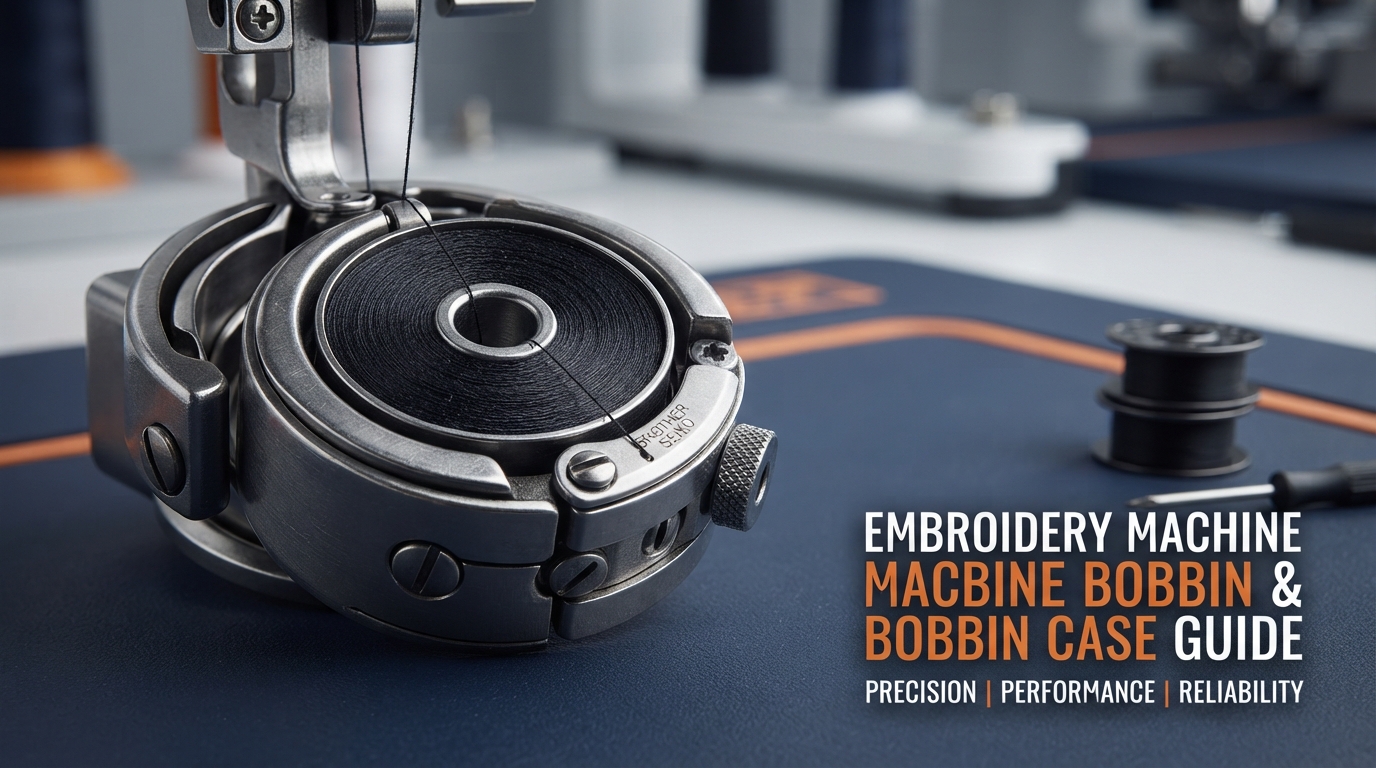
The Bobbin System: Small Part, Big Impact
The bobbin and bobbin case form the lower half of the stitch-forming system in your embroidery machine. Together with the upper thread and rotary hook, they create the lockstitch that holds every design together. When the bobbin system is off — wrong tension, worn case, incorrect winding — the results are immediately visible in your embroidery quality.
Understanding how your bobbin system works and how to maintain it is one of the most valuable skills for any commercial embroidery operator.
Types of Bobbins Used in Embroidery Machines
Standard SA Bobbin (Class 15)
The most common bobbin type for commercial embroidery machines including Tajima, Juki, SWF, Happy, and most multi-head machines. Measures approximately 11.7mm high x 20.8mm diameter. Available in plastic and metal.
Barudan Bobbin
Slightly different dimensions from the standard SA bobbin. Not interchangeable with Tajima bobbins. Always use bobbins specific to your Barudan model.
Pre-Wound Bobbins
Factory-wound polyester bobbin thread on disposable plastic bobbins. The thread is wound under consistent tension using industrial winding machines — more consistent than operator-wound bobbins. Pre-wound bobbins reduce per-piece thread cost and eliminate tension inconsistencies from uneven winding. SA Embroidery stocks pre-wound bobbins in 90m and 135m lengths.
Metal vs Plastic Bobbins
Both types work correctly when maintained properly:
- Metal bobbins: More durable, consistent diameter tolerances, preferred for high-speed production machines. Slightly heavier, which can affect threading on some machines.
- Plastic bobbins: Lighter, more common, lower replacement cost. Can deform slightly over time or crack if dropped. Fine for standard production speeds.
Bobbin Case: The Tension Controller
The bobbin case holds the bobbin and controls the lower thread tension via a leaf spring. The tension screw on the bobbin case adjusts how tightly the spring grips the thread as it passes. Getting this right is critical:
- Too tight: Upper thread is pulled through to the bottom — the underside shows rows of upper thread color
- Too loose: Loops form on the underside — the upper thread is not being pulled down properly
- Correct: A slight amount of bobbin thread is visible as a thin line on the underside, centered between rows of stitching
How to Set Bobbin Case Tension
- Load the bobbin into the case and pull the thread through the tension slot
- Hold the bobbin case by the thread only — it should drop slowly (1–2 seconds to drop 30cm). This indicates correct tension.
- If it drops immediately, tighten the tension screw a quarter turn clockwise
- If it doesn't drop, loosen the tension screw a quarter turn counter-clockwise
- Fine-tune by running test stitches and checking the underside for balance
Common Bobbin Case Problems
Inconsistent Tension Despite Adjustment
If you adjust the tension screw and the tension still varies, the tension spring is fatigued. Replace the bobbin case. Metal cases last 2–3 years under heavy use; plastic cases should be replaced annually.
Thread Catching Inside the Case
Burrs or rough spots inside the bobbin case catch the thread during runout. Inspect the thread entry path inside the case. A rough spot means replacement — do not attempt to file the inside of a bobbin case.
Bobbin Doesn't Sit Flat in the Case
A bobbin that wobbles in the case causes variable tension and skipped stitches. This can be caused by a deformed bobbin (plastic bobbins deform when dropped) or a worn bobbin case bore. Replace both.
Bobbin Winding Tips
- Wind at a consistent medium speed — too fast creates tight, over-wound bobbins; too slow creates loose winding
- Never fill bobbins more than 90% full — a too-full bobbin catches the bobbin case opening
- Wind with the same thread you'll use for production. Mixed thread types on the bobbin create inconsistent tension
- Consider pre-wound bobbins for large-scale production — they save significant time and reduce tension variables
Sourcing Bobbins and Bobbin Cases from Pakistan
SA Embroidery stocks bobbins, bobbin cases, and pre-wound bobbins for all common embroidery machine brands. We supply in quantities from 10 units to full production stocks. Contact us with your machine model for correct part specification and wholesale pricing.
Need embroidery machine parts?
WhatsApp us. We respond within 24 hours, Mon–Sat
Frequently Asked Questions
Common questions about this topic
1How do I know if my bobbin case tension is correct?
Hold the bobbin case by the thread only. It should drop slowly — approximately 1–2 seconds to drop 30cm when you give it a gentle shake. If it falls immediately, tension is too low. If it doesn't move, tension is too high.
2How often should I replace bobbin cases?
Replace bobbin cases annually under standard commercial use, or when you can no longer achieve consistent tension despite adjusting the tension screw. Metal cases last longer than plastic cases.
3What is a pre-wound bobbin and is it worth using?
Pre-wound bobbins are factory-wound bobbin thread on disposable plastic bobbins. They provide more consistent tension than operator-wound bobbins and save winding time. For high-volume operations, they reduce per-piece cost and improve quality consistency.
4Are Tajima and Barudan bobbin cases interchangeable?
No. Tajima and Barudan use slightly different bobbin case dimensions. Always use the correct bobbin case for your specific machine brand and model.