


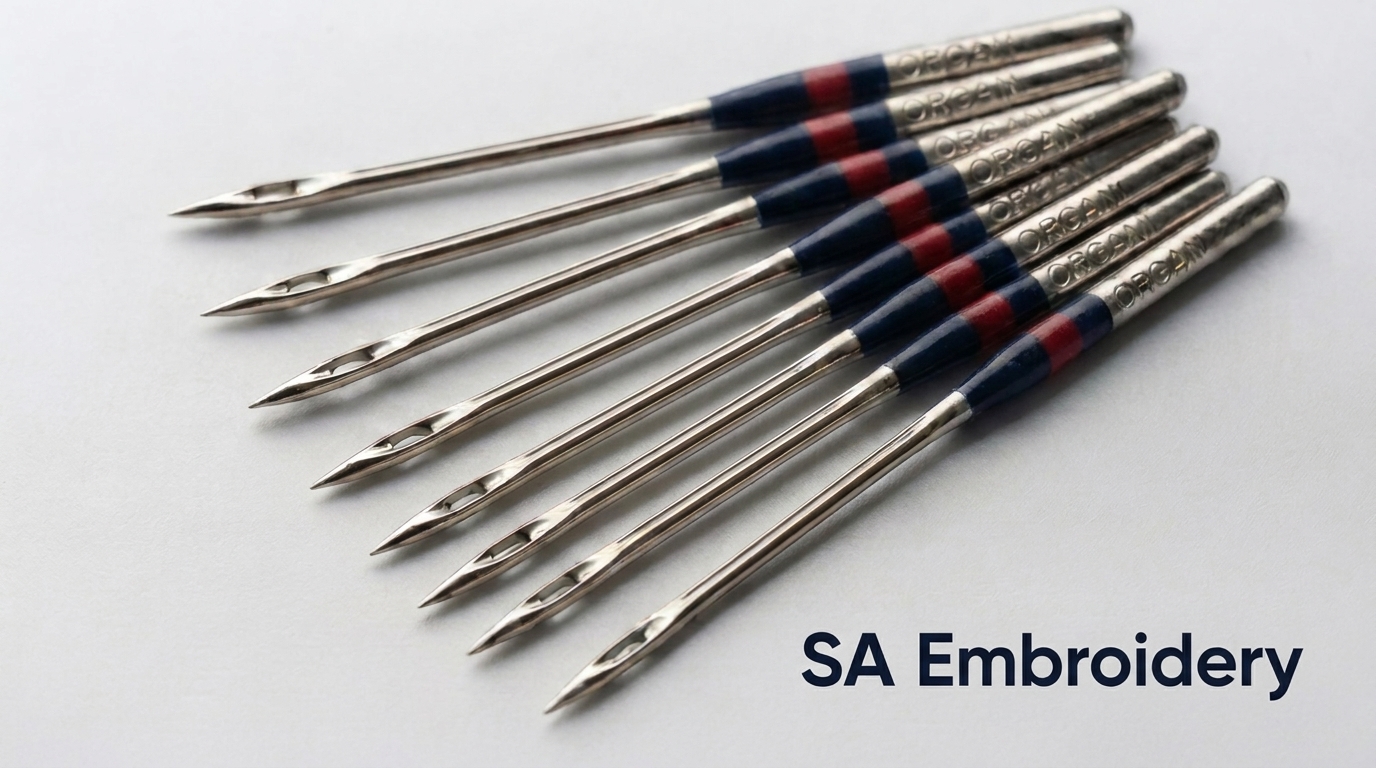
Choosing the rightmachine embroidery needlesis essential for achieving clean, consistent, and professional embroidery results. At SA Embroidery, we understand that even a small needle can have a major impact on stitching quality, thread performance, and fabric appearance. The needle passes through the fabric repeatedly during the embroidery process, so its size, point, eye, and compatibility with the machine all matter. Using an unsuitable needle can contribute to thread breaks, skipped stitches, fabric damage, and inconsistent results. Whether you operate a commercial embroidery business, manage an embroidery workshop, or use an industrial embroidery machine, understanding how to select the right needle can make your production process more efficient. In this guide, we will explain embroidery machine needles, their sizes, types, fabric compatibility, thread requirements, and the key factors to consider before making a purchase. Machine embroidery needles are specifically designed for embroidery machines and the repeated stitching process used to create detailed designs. An embroidery needle contains several important parts, including the shaft, eye, point, and groove. These parts work together to allow the needle to move through the fabric while the embroidery thread passes smoothly through the material. Different embroidery applications require different needle sizes and point styles. A needle that works well with lightweight fabric may not produce the same results on thick fabric or dense embroidery. This is why needle selection should involve more than simply choosing a particular size. Machine compatibility, fabric type, thread weight, and design density should all be considered. The needle moves through the fabric thousands of times during embroidery. If the needle is not suitable for the fabric or thread, it can negatively affect the final design. The correct needle can support smooth thread movement, clean fabric penetration, and consistent stitching. An unsuitable needle may increase the chances of thread breaks, skipped stitches, puckering, or visible fabric marks. For businesses that operate embroidery machines for long production hours, these issues can affect productivity and finished product quality. The best embroidery needles are not necessarily the most expensive ones. The best choice is the needle that properly matches your embroidery machine, fabric, thread, and production requirements. Understanding embroidery needle sizes is an important step in choosing the right needle. Sizes are commonly displayed as 65/9, 70/10, 75/11, 80/12, or 90/14. The first number generally represents the metric size, while the second represents another standard needle sizing system. As the metric number increases, the needle generally becomes thicker. Smaller sizes are often used for lightweight fabrics and fine embroidery, while larger sizes can be suitable for heavier fabrics and thicker threads. However, needle size should not be selected based only on fabric thickness. Thread weight, design density, and machine specifications should also be considered. An embroidery needle size chart provides a useful reference for understanding common needle sizes and their typical applications. These are general guidelines rather than strict rules. The appropriate needle can vary depending on the embroidery machine, fabric, thread, and design. For more detailed information about needle sizing, SA Embroidery also provides resources covering different embroidery needle sizes and their common applications. Fabric is one of the most important factors when choosing embroidery needles. Lightweight fabrics generally require finer needles because a larger needle can leave unnecessary holes or affect the fabric structure. Heavier materials may require a larger needle that can penetrate the material effectively. Stretch and knit fabrics also require careful consideration because their construction differs from woven materials. The needle point can influence how the needle moves through the fabric. The goal is not simply to choose the smallest or largest needle. Instead, choose a size that can properly handle the fabric while working smoothly with the selected thread. Thread weight and type also influence needle selection. Different embroidery threads can require different needle sizes and eye configurations. A standard embroidery thread may work well with a commonly used needle size, while thicker or specialty threads may require a larger eye. If the needle eye is too small for the thread, friction can increase and may contribute to thread breaks. If the needle is unnecessarily large, it can create larger holes in the fabric. For this reason, choosing suitable embroidery machine needles requires consideration of both thread and fabric. Embroidery design density is another factor that should not be overlooked. A highly dense design contains many stitches within a relatively small area. The needle therefore penetrates the same section of fabric repeatedly. Fine designs may work well with smaller needles when the fabric and thread allow it. Dense designs on heavier materials may require a larger needle. Considering design density together with fabric and thread can help you make a more suitable needle selection. Different types of embroidery needles are available for different fabrics and embroidery applications. Sharp point needles are commonly used with woven fabrics where precise penetration is required. Ball point needles may be suitable for certain knit and stretch fabrics because their rounded point can move between fabric fibers. Specialty embroidery applications can also require specific needle types depending on the material or thread being used. Before purchasing any needle, check its specifications and make sure the needle system is compatible with your embroidery machine. Selecting the right machine embroidery needles becomes easier when you consider the complete embroidery setup. First, check your embroidery machine specifications and identify the correct needle system. Next, consider the fabric you will be embroidering, including its weight and construction. Then check the thread. The needle eye should provide enough space for the thread to pass smoothly without unnecessary friction. Finally, consider the embroidery design. Dense designs may place additional demands on the needle, thread, and fabric. By considering the machine, fabric, thread, and design together, you can reduce trial and error and make more informed needle selections. Using unsuitable embroidery machine needles can contribute to several common embroidery problems. Thread breaks are one of the most noticeable issues. If the needle does not match the thread or machine setup, friction can increase and affect thread movement. Skipped stitches may also occur when a needle is damaged, worn, incorrectly installed, or unsuitable for the embroidery application. Fabric damage is another possible problem. A needle that is too large for delicate material can leave visible holes or marks. If embroidery quality suddenly changes, checking the needle can be a useful troubleshooting step before adjusting other machine settings. Embroidery needles can become worn through regular use, especially when machines operate for extended periods. There is no universal replacement schedule because needle life depends on production volume, fabric type, thread, machine speed, and embroidery design. Inspect the needle regularly and replace it if it becomes bent, damaged, or worn. If you experience repeated thread breaks or skipped stitches, checking the needle can help identify a possible cause. Commercial embroidery businesses can benefit from keeping commonly used needle sizes available to avoid unnecessary production interruptions. Proper storage and handling can help protect unused needles. Keep new needles in their original packaging and store them in a clean, dry environment. Avoid mixing different sizes together because this can make it difficult to identify the correct needle when needed. It is also useful to organize needles according to size and application. Commonly used sizes can be kept separately from specialty sizes. Good organization makes needle selection easier and helps embroidery operators maintain a consistent production process. The best embroidery needles can vary depending on the type of work your business performs. An embroidery company working mainly with lightweight garments may have different requirements from a business embroidering jackets, caps, uniforms, canvas, or other heavier materials. Instead of using one needle size for every application, businesses can keep several commonly used sizes available. This provides greater flexibility and makes it easier to select a suitable needle when changing between different fabrics, threads, and embroidery designs. Businesses that operate embroidery machines regularly need a consistent supply of suitable needles. Before purchasing, check the needle system, size, specifications, machine compatibility, packaging, and supplier reliability. For wholesale purchasing, product availability and consistent quality are also important. Working with a specialized supplier can make sourcing easier because businesses can find different embroidery machine components from one source. SA Embroidery offers embroidery machine parts and supplies for businesses that need products for different embroidery applications. Its product range includes embroidery needles and other machine components. SA Embroidery specializes in embroidery machine parts and supplies for embroidery businesses and production environments. When purchasing embroidery machine needles, choosing a supplier that understands embroidery equipment can make the buying process easier. SA Embroidery provides embroidery needles and other embroidery machine components, allowing businesses to source products for different machine and production requirements. Before placing an order, always check your machine model, needle system, required size, fabric, and thread requirements. This helps ensure that the needle you select is suitable for your particular embroidery application. Choosing the right machine embroidery needles is an important part of achieving consistent and professional embroidery results. Needle selection is not only about size. Fabric type, thread weight, design density, machine compatibility, and needle condition can all affect performance. Understanding embroidery needle sizes and using anembroidery needle size chartas a reference can make the selection process easier. However, the final choice should always be based on your complete embroidery setup. Whether you need individual embroidery needles or regularly purchase them for commercial production, focus on compatibility, quality, and your specific embroidery requirements. For businesses looking for embroidery machine supplies, SA Embroidery offers embroidery needles and other machine components to support different embroidery applications.What Are Machine Embroidery Needles?
Why Choosing the Right Embroidery Needles Matters
Understanding Embroidery Needle Sizes
Embroidery Needle Size Chart
How Fabric Affects Needle Selection
How Thread Affects Embroidery Machine Needles
How Design Density Affects Needle Choice
Different Types of Embroidery Needles
How to Choose the Right Machine Embroidery Needles
Common Problems Caused by the Wrong Needle
When Should You Change an Embroidery Needle?
How to Maintain Your Embroidery Needles
Choosing the Best Embroidery Needles for Your Business
Buying Embroidery Machine Needles for Commercial Use
Why Choose SA Embroidery?
Final Thoughts
Need embroidery machine parts?
WhatsApp us. We respond within 24 hours, Mon–Sat
Frequently Asked Questions
Common questions about this topic
1What are machine embroidery needles?
Machine embroidery needles are needles specifically designed for use with embroidery machines. They are available in different sizes and point styles for different fabrics, threads, and embroidery applications.
2What is the most common embroidery needle size?
The 75/11 size is commonly used for general embroidery applications. However, the ideal size depends on the fabric, thread, embroidery design, and machine specifications.
3How do I choose the right embroidery needle size?
Consider the fabric, thread weight, design density, and machine specifications. Lightweight materials generally require finer needles, while heavier fabrics and thicker threads may require larger sizes.
4What is an embroidery needle size chart used for?
An embroidery needle size chart helps compare different needle sizes and their common applications. It should be used as a reference because the ideal needle can vary depending on the embroidery setup.
5Where can I buy machine embroidery needles?
You can purchase machine embroidery needles from specialized embroidery machine parts suppliers. SA Embroidery offers embroidery needles and other embroidery machine components for different embroidery applications.
6What are the best embroidery needles for commercial machines?
The best embroidery needles depend on the machine, fabric, thread, and production requirements. Always check compatibility and specifications before purchasing.