


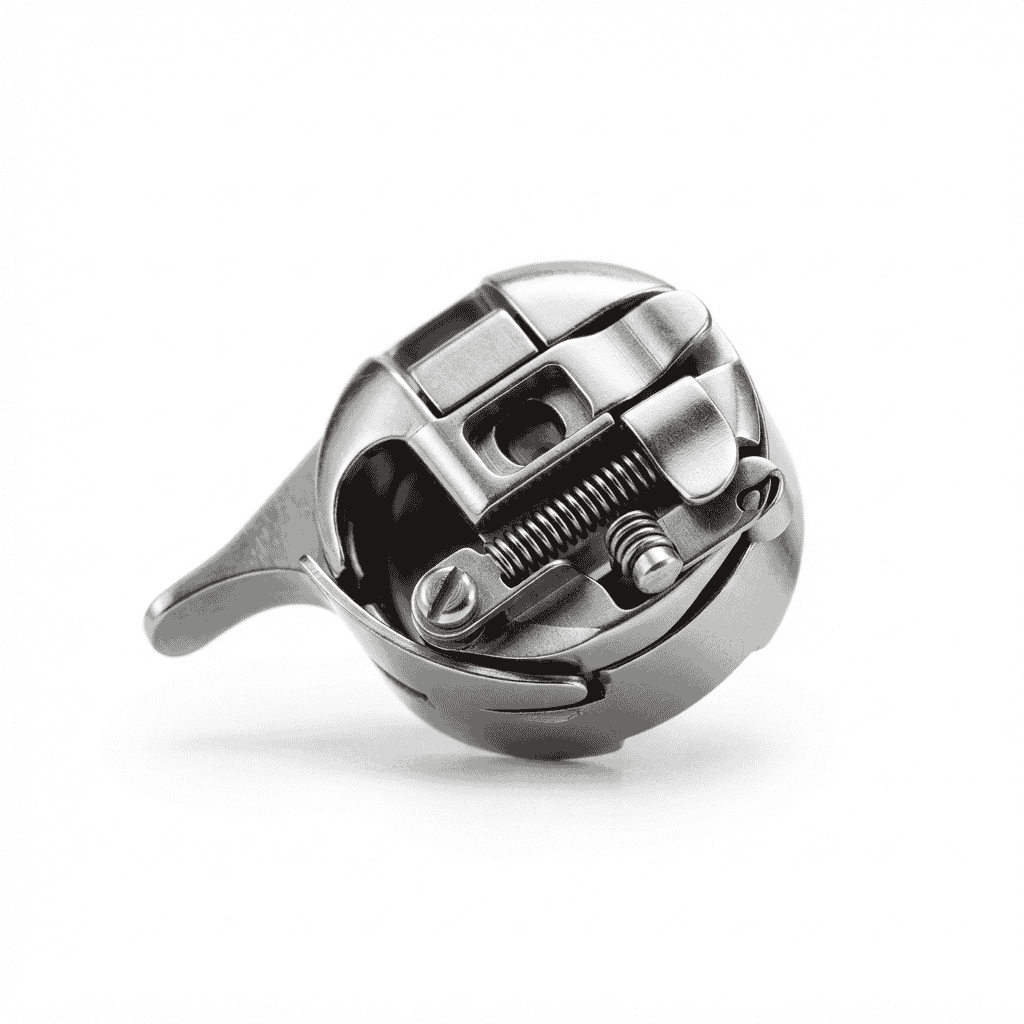
A bobbin case is one of those parts that most sewers do not think about very often, but it quietly plays a huge role in everything you stitch. Every time your machine runs, this small component is working behind the scenes, holding your bobbin steady and controlling how smoothly your lower thread moves. When it is working properly, you do not even notice it. But when something goes wrong, you notice immediately.
If you have ever dealt with messy stitches underneath your fabric, thread bunching, or your machine suddenly acting up for no clear reason, there is a good chance this part was involved. That is exactly why understanding it matters whether you sew at home, run a small workshop, or operate a busy commercial production line.
This guide covers everything you need to know about choosing, using, and replacing this essential component so you can keep your sewing and embroidery machines running the way they should.
What Is a Bobbin Case
So what is a bobbin case exactly? In simple terms, it is a small metal housing that sits inside the lower part of your sewing or embroidery machine. Its job is to hold the bobbin securely in place while the machine stitches. The bobbin holds your lower thread, and the case makes sure that thread feeds out at the right speed and with the right amount of resistance.
Think of it this way. Your upper thread comes down through the needle, loops around the bobbin thread inside the case, and pulls it up to form a stitch. If this part is damaged, worn out, or not fitted properly, that loop does not form correctly and your stitches come out uneven, loose, or tangled underneath the fabric.
It is a small part that does a big job, and once you understand how it works, you start to appreciate why using a quality one matters so much.
The bobbin case assembly is not just one piece. It is made up of several small components that work together. The main housing holds the bobbin. A small tension spring and screw control how tightly the thread is held as it feeds out. And a latch or clip mechanism locks everything into position inside the machine. When all these parts are working correctly, your lower thread feeds smoothly and your stitches look clean and balanced on both sides of the fabric. But over time, the tension spring can weaken, the housing can develop wear marks, and the latch mechanism can loosen. That is when you start seeing problems, and that is usually when it is time to think about a replacement. Understanding how this assembly works helps you troubleshoot problems faster. Instead of guessing what is wrong with your machine, you can check these components and often find the issue quickly. Not every sewing machine bobbin caseis the same. Different machines use different bobbin systems, and the one that works perfectly in one machine might not fit another at all. This is one of the most important things to understand before you order a replacement. There are two main types of bobbin systems. The first is the front loading system where the case slides in from the front. The second is the top loading or drop in system where the bobbin sits directly into a holder from the top without a separate removable case. Most industrial sewing machines and many older home machines use the front loading system with a removable case. Newer home machines often use the drop in system. Knowing which system your machine uses is the first step in finding the right replacement. The Brother bobbin caseis one of the most commonly searched replacement parts because Brother machines are so widely used around the world. Some Brother home machines use a drop in system that does not have a traditional removable case. Other models, especially the older and professional ones, use a front loading case that can be removed and replaced. The important thing is to check your specific Brother model number before ordering because a part that fits one Brother machine might not fit another. If you are not sure, check your machine manual or look up your model number online. Singer bobbin case replacements are another popular search because Singer machines have been around for generations. Many families still have Singer machines that have been running for decades, and keeping them in good condition means having the right replacement parts available. Singer makes machines with both front loading and top loading systems. The classic Singer models typically use a front loading removable case. As with any brand, checking your model before ordering is the simplest way to make sure you get the correct fit. The Juki bobbin case is essential for anyone running Juki industrial sewing machines. Machines like the DDL-5550, DDL-8700, and DDL-9000 are workhorses in garment factories and production facilities around the world. These machines run at high speeds for long hours, and every component needs to keep up with that demand. Industrial cases are built with tighter tolerances than home machine parts. They need to maintain consistent lower thread control even when the machine is running flat out for hours. A worn or damaged one shows up quickly as uneven stitches, thread bunching, or skipped stitches that slow down your whole production line. At SA Embroidery, we supply genuine Juki cases along with a full range of compatible parts for other machine brands. Our customers include factories, repair shops, and distributors who need reliable parts that perform consistently. Most sewing problems that people blame on the machine, the thread, or the needle are actually caused by this one small part. Here are the most common signs that yours needs attention. Thread bunching underneath the fabric is one of the first signs. This usually means the case is not holding the thread at the right resistance, either because the tension spring has weakened or because the housing has developed wear. Loose or uneven stitches on the underside often point to a case that is not sitting properly in the machine. If the latch has worn or it does not click into place firmly, the bobbin can shift during sewing and throw off your stitch formation. The machine making unusual clicking or grinding sounds around the lower area is another warning sign. This can mean the housing has developed rough spots or damage that is interfering with smooth thread movement. Thread constantly breaking or tangling around the lower area often happens when sharp edges from wear are cutting or snagging the thread as it feeds through. If you notice any of these issues, checking this component is always a good first step before assuming the problem is somewhere else. Knowing when to replace this part can save you a lot of frustration and wasted time. Consider replacing it if you see visible wear marks, scratches, or rough spots on the inside of the housing. Also replace it if the latch mechanism feels loose or does not click firmly into place anymore. If your tension spring has weakened and adjusting the screw no longer gives you consistent results, that is another clear sign. And if you have been using the same one for years in a busy sewing operation, replacing it as a preventive measure is honestly one of the cheapest and smartest maintenance steps you can take. A new part costs very little compared to the production time you lose when a worn one causes repeated problems. Keeping a spare on hand means you can swap it out immediately instead of stopping work. Choosing the right bobbin case for sewing machine replacement comes down to three simple things. First, know your machine brand and exact model number. Second, confirm whether your machine uses a front loading or top loading system. Third, buy from a reliable supplier that stocks genuine or quality compatible parts. At SA Embroidery, we stock cases for Brother, Singer, Juki, and other popular sewing and embroidery machine brands. If you are unsure which one fits your machine, our team is available on WhatsApp to help you confirm the right part before you order. A good bobbin case is one of the simplest ways to keep your sewing or embroidery machine running smoothly. Whether you use a Brother, Singer, or Juki machine, choosing the right one and replacing it when needed saves you time, thread, and frustration in the long run. If you are looking for genuine replacement parts, SA Embroidery supplies quality parts for all major machine brands with fast worldwide shipping. Reach out via WhatsApp or visit saembroidery.com to find the right part for your machineHow the Assembly Works
Choosing the Right One for Different Machine Types
Brother Bobbin Case for Home and Commercial Machines
Singer Bobbin Case for Classic and Modern Machines
Juki Bobbin Case for Industrial Sewing
Common Problems and How to Spot Them
When to Replace It
How to Choose the Right Replacement
Conclusion
Need embroidery machine parts?
WhatsApp us. We respond within 24 hours, Mon–Sat
Frequently Asked Questions
Common questions about this topic
1Q: What is a bobbin case?
A small metal housing that holds the bobbin and controls lower thread movement during stitching.
2Q: How do I find the right one for my machine?
Check your machine brand and model number before ordering to ensure correct fit.
3Q: When should I replace it?
When you notice visible wear, loose latch, weak tension spring, or repeated thread bunching.
4Q: Can a worn one damage my machine?
It usually does not damage the machine but causes poor stitch quality and wasted production time.
5Q: What is the difference between a bobbin and a bobbin case?
The bobbin holds thread. The case holds the bobbin and controls how thread feeds during stitching.
6Q: Where can I buy a quality replacement?
SA Embroidery supplies genuine parts for Brother, Singer, Juki with worldwide shipping.